Guide · 9 min read

Luton van capacity: what actually fits in one

The brochure figure says one thing, the job on Saturday says another. Here’s what a Luton holds in rooms and furniture, where the weight runs out before the space does, and how to tell from the customer’s list whether it’s one trip or two.

Just want the numbers? They’re in the first box.

Updated

Part 1

What a Luton holds

The size, what fits by house size and by item, the weight limit nobody checks, and how a Luton stacks up against the vans you already know.

1. The numbers, and the one to plan on

Cost
About £80 to £120 a day to hire
Time
An hour or two to load a full one
Suits
A 1-bed or a tight 2-bed in one go

The figure on the hire company’s website is the box packed to the roof, every gap filled, like a game of Tetris you’ve won. Real removals don’t load like that. A sofa doesn’t stack, a bed frame leaves a hole, and you want the stuff to arrive in one piece.

So plan on about 85% of it. That’s the number to quote on, and it’s what keeps you from standing on the pavement at four o’clock with a dining table and nowhere to put it.

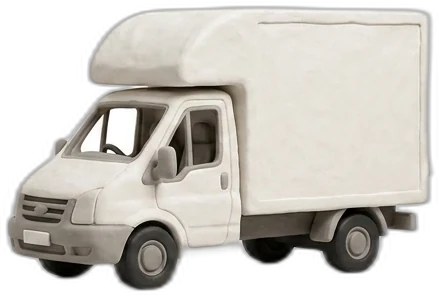
The bit over the cab (the Luton, which is where the name comes from) is worth knowing about. It’s the best place in the van for mattresses, duvets and light boxes, and it’s the first space people forget to use.

Hire prices above are the usual run for a day from the big hire firms; they move with the season and where you are, so check locally.

A standard 3.5 tonne Luton box van
Inside the boxabout 4 metres long, 2.1 wide, 2.1 high
Packed to the roofabout 20 cubic metres (roughly 700 cubic feet)
What to plan onabout 17 cubic metres (roughly 600 cubic feet)
Payloadabout 1,200 kg, or 1,100 kg with a tail lift
Drivable on a car licence (category B)

2. What fits, by house size

These are the middle of the road: a normal household’s worth of stuff for that size of place. Every job is somebody’s actual house, though, and that’s where the trouble starts.

The 2-bed is the one that catches people out. On paper it’s a Luton. In real life it’s a Luton if the loft’s empty, the shed’s been cleared and nobody’s kept the cot “just in case”. Get any of those wrong and you’re back for a second run.

Rules of thumb that hold up: a garden adds a good chunk (table, chairs, mower, the bikes). A loft that’s actually used can add half a room. A home office adds a desk, a chair and more boxes than anyone admits to.

If the customer says “we haven’t got much”, quote on the house size anyway and come down if they’re right. Nobody’s ever had less than they said.

Typical loads against one Luton
Studio or bedsitabout a third of the van
1-bed flatabout three quarters, with room to spare
2-bed flat or housea full Luton, packed well
3-bed housetwo Luton loads, or one bigger lorry
4-bed housetwo to three Luton loads

3. Item by item: how much of the van each thing takes

Thinking in fractions of the van beats thinking in cubic anything. Nobody walks round a house measuring a sofa, but everybody can picture a tenth of the van gone.

Big soft things eat the most space for their weight: sofas, beds, mattresses. Heavy small things (washing machines, books, tools) take hardly any room but count against the weight limit fast.

Boxes are the hidden load. A 2-bed easily has forty or fifty, and that’s a sixth of the van before a stick of furniture goes in. Ask how many. If they don’t know, they haven’t packed yet, and it’ll be more.

Flat-pack that gets taken down saves a surprising amount. A wardrobe in bits stacks against the side wall; a wardrobe in one piece needs its own slot.

Roughly how much of a Luton each one fills
Corner sofaabout a sixth
3-seater sofaabout a tenth
Double bed, frame and mattressabout a twelfth
Double wardrobeabout a fourteenth
Dining tableabout a seventeenth
Washing machineabout a fortieth
Medium removal boxclose to 300 of them would fill it

4. Weight runs out before space does

Cost
A fine, and the van stopped where it is
Time
Two minutes to think about it
Suits
Anyone loading books, tools or a garage

A 3.5 tonne Luton is 3.5 tonnes with everything in it: the van, the fuel, you, your mate and the load. That leaves about 1,200 kg for the customer’s stuff, and a tail lift takes another hundred or so off that.

For a normal house of furniture you’ll fill the box before you hit the weight. The jobs that break the rule are the ones with books, a workshop, a piano, garden stone or a home gym. Those can be over weight with half the box empty.

Over weight is a real problem: if you’re stopped, you can be fined and told the van doesn’t move until it’s lighter. And the brakes, the tyres and the insurance all assume you’re under it.

When the list has a lot of heavy small stuff in it, plan two trips or a bigger lorry, even if it looks like it’ll fit.

5. A Luton against the vans you already know

A Luton holds about as much as three short Transit Customs, or a Sprinter and a half. That’s the whole case for it: one run instead of two or three on a house move.

What you give up is getting about. A Luton is tall, so watch for low bridges, multi-storey car parks and some drive-throughs, and it’s wider to park on a terraced street. A high-roof Sprinter will go places a Luton won’t.

A lot of one-van firms run a big panel van day to day and hire a Luton for house moves. That works, as long as the hire goes into the price and not out of your pocket.

Whichever you run, quote by the job, not the van. The customer doesn’t care what it’s called; they care that everything turns up in one go at the price you said.

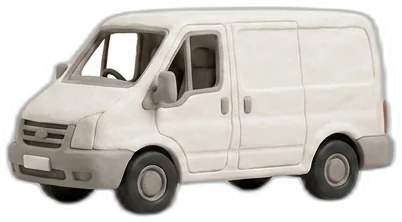
  • Transit Custom, short wheelbaseAbout a third of a Luton
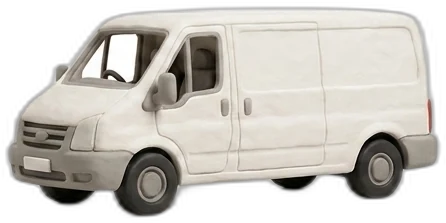
  • Transit Custom, long wheelbaseJust over a third
  • LutonThe full box
How the usual vans compare to one Luton
Transit Connect or Caddyabout a fifth of a Luton
Transit Custom short wheelbaseabout a third
Transit Custom long wheelbasejust over a third
High-roof Transit or Sprinterabout two thirds
Extra-long Sprinterabout three quarters
Three Transits’ worth. He’s still putting the mattress over the cab.

Part 2

Quoting a Luton job

When one Luton isn’t enough, how to read a customer’s list for size, letting the quote work the van out for you, and getting the price right.

6. When it won’t fit: two trips or a bigger lorry

Over one Luton, you’ve got two choices. Two runs in the same van, or a 7.5 tonne lorry that takes it in one.

Two runs is usually right for a local move: an extra hour or two of driving, priced in. Over thirty-odd miles, the second run starts to cost more than the lorry, and the day gets long fast.

The catch with a 7.5 tonner is the licence. If you passed your test before 1997 you can probably drive one already (check for C1 on your licence); if you passed after, you can’t without the extra test. Even then, carrying for pay in anything over 3.5 tonnes needs an operator licence, a Driver CPC and a tachograph, so for most one-van firms the answer is to hire one with a driver for the big jobs.

Either way, decide before you quote, not on the day. Telling a customer at three o’clock that there’s a second trip at extra cost is how you get a one-star review.

7. Reading a customer’s list for size

Most size mistakes aren’t sums gone wrong, they’re things nobody mentioned. The list says sofa, beds, wardrobe, boxes. The house has a loft, a shed and a garage.

Go through it in the same order every time: the big furniture, then the white goods, then boxes, then outside and up top. The last two are where the second trip hides.

Photos beat a typed list every time. People forget what they own; a photo of the room doesn’t. A photo of the garage door shut, mind you, tells you nothing, so ask.

The message below does the job in one go, before you’ve priced anything.

The message to send when the list looks short
Thanks for that, [name]. Just so the price is right first time: is there anything in the loft, the shed or the garage, and roughly how many boxes will there be? Better to know now than find out on the day. Cheers, [your name]

8. How Kwotly works out the van for you

Cost
Every plan, up to its photo scanner allowance
Time
Done by the time you open the quote
Suits
Anyone pricing from a phone

With Kwotly, an enquiry comes in already worked out: the furniture listed, the load added up, and which van it fits in, from the customer’s list or the photos they add.

If it’s more than one van-load, it says so. On a local job it works out the extra runs, priced at your rates: the extra driving, the extra loading time, all of it. On a long one, where nipping back isn’t an option, it asks you to pick: two trips, a bigger van or a second van. No guessing at a sofa’s worth of space on the phone at nine at night.

You tell it your vans once. A Luton, a Sprinter, whatever’s in the yard. If you haven’t, it plans on a Luton, because that’s what most house moves go out in.

It won’t see inside a shut garage, and nor would you. When the list looks light, fix it in two taps before it goes. You are always the one pressing send.

9. Pricing a Luton job so it pays

Price the job, not the hours you hope it takes. A full Luton is a full day for two people once you count the loading, the drive, the stairs and the unloading.

If you hire the Luton, the hire, the fuel and the insurance excess all go in the price. A Luton does somewhere in the low twenties to the gallon; on a longer move that’s real money.

Charge for what makes a Luton job hard: stairs with no lift, a long carry from the kerb, a parking suspension, the clean air charge in the cities that have one. Those are the bits a quick price forgets.

For the going rates by job size, what a man with a van makes has a worked week with real numbers.

One run, one price, no surprises at three o’clock.

Start here

Five things to do this week

Ten minutes each, and every one saves you a second trip you didn’t price.

  1. Write down what your van actually holds in house sizes: “a 1-bed and a bit” is more use than any brochure figure.
  2. Weigh up your heaviest regular job (books, tools, a gym) against your payload, not your space.
  3. Add “loft, shed, garage, and how many boxes?” to the first message you send every customer.
  4. Find your nearest 7.5 tonne hire, with a driver, for the job that won’t fit in one Luton.
  5. Check the last three house moves you did: one trip or two, and did the price say so?

Straight answers

Questions people ask

How much weight can a Luton van carry?

A 3.5 tonne Luton usually carries about 1,200 kg of load, or about 1,100 kg with a tail lift, after the van, the fuel and the crew. Check the plate on the one you’re driving, because they vary. A normal house of furniture fills the box before it hits the weight; books, tools and garden stone can hit the weight with half the box empty.

How many cubic feet is a Luton van?

About 700 cubic feet packed to the roof (around 20 cubic metres), and about 600 cubic feet (around 17 cubic metres) as a realistic load for a removal. Plan on the smaller number: furniture doesn’t stack like boxes.

Will a 3-bed house fit in one Luton?

Usually not. A typical 3-bed is about two Luton loads, so it’s two trips or a 7.5 tonne lorry. A small 3-bed that’s had a good clear-out can squeeze into one; quote for two and come down if it does.

Can I drive a Luton van on a car licence?

Yes, a 3.5 tonne Luton is fine on a standard car licence (category B). Anything heavier, like a 7.5 tonner, needs C1. If you passed your test before 1 January 1997 you probably have C1 already; check your licence.

Do I need an operator licence for a Luton?

Not for paid work in Great Britain in a van at or under 3.5 tonnes. Over 3.5 tonnes, you do. Taking a van over 2.5 tonnes abroad for paid work is different, and has needed a licence since 2022, so check GOV.UK before you quote a job overseas.

Does Kwotly tell me which van a job needs?

Yes, on every plan. The enquiry lands with the furniture listed and the van it fits in, based on the vans you’ve told it you run (or a Luton if you haven’t). Photos are read up to your plan’s photo scanner allowance; after that they land with the quote for you to price. If it’s more than one load, it prices the extra runs at your rates, or on a long move asks whether you want two trips, a bigger van or a second van. You check it and send it; nothing goes out without you. See what it costs.

Know it fits before you send the price

Kwotly works out the load and the van from the customer’s list or photos, priced at your rates, and tells you when it’s more than one run. You check it and send it from your phone, in minutes, not at nine at night.

Get your quote page, free

Free plan · no card · ten quotes a month · set up on your phone, no call or training day

Already on Kwotly? Log in